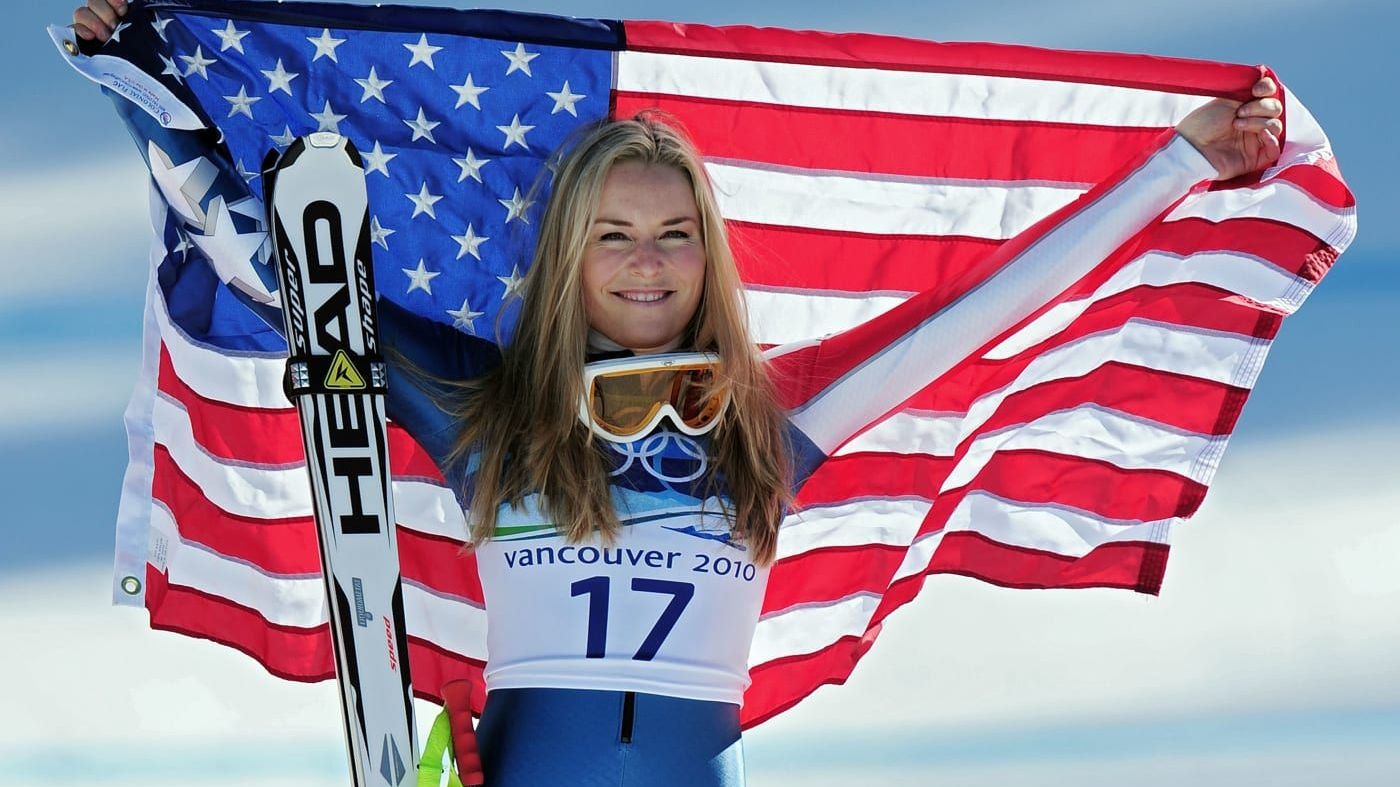
Lindsay Vonn’s career is one of the most remarkable in the history of alpine skiing. Her toughness, resilience, and refusal to back down from pain helped define her legacy as a champion. But those same traits may have also played a role in one of the most questionable decisions of her career—competing in the Olympics despite a torn ACL and a body worn down by years of severe injuries.
Elite athletes are often praised for their ability to ignore pain. In Vonn’s case, that mentality became part of her identity. Multiple knee surgeries, fractures, concussions, and chronic damage never seemed to slow her desire to compete. By the time she returned to Olympic competition later in her career, the physical warning signs were impossible to ignore. Skiing downhill at Olympic speed requires absolute trust in one’s body—trust that a torn ACL simply cannot provide.
While ambition and confidence are essential at the elite level, there is a fine line between belief and overconfidence. Vonn had beaten the odds so many times before that it likely reinforced the idea that she could do it again. Champions often come to see themselves as exceptions to the rules of recovery and risk. That mindset can fuel greatness—but it can also cloud judgment.
When Ego Enters the Equation
One uncomfortable but necessary conversation centers on ego. Not ego in the shallow sense, but the inflated self-belief that develops when an athlete has spent years proving doubters wrong. Vonn was not just competing against other skiers—she was competing against her own reputation. Walking away from the Olympics may have felt, to her, like admitting vulnerability or decline.
That inflated sense of invincibility may have directly contributed to her crash and injury. Alpine skiing punishes hesitation, poor positioning, and delayed reactions—subtle deficits that often emerge when an athlete is compensating for injury. A torn ACL affects balance, proprioception, and knee stability, even when pain is manageable. If an athlete believes they are still capable of pushing at full throttle, they may ski more aggressively than their body can safely handle.
In this context, ego can override caution. Instead of dialing back risk or accepting limitations, an athlete may attempt to ski the course the same way they always have—fast, fearless, and uncompromising. That mismatch between mindset and physical reality is often where injuries occur. The body can no longer deliver what the mind demands.
The Illusion of Toughness
Vonn’s decision was widely praised as courageous, reinforcing a dangerous narrative in elite sport: that toughness means ignoring medical reality. While grit is admirable, competing while seriously injured shifts the focus from performance to survival. Rather than attacking the course freely, the athlete is subconsciously protecting damaged areas, altering mechanics, and relying on instinct instead of stability.
For someone whose success was built on confidence and aggression, that internal conflict was likely magnified. The belief that she could simply “push through” may have masked the reality that her body was no longer capable of responding the way it once did.
A Legacy Complicated by Overambition
None of this erases Lindsay Vonn’s greatness. If anything, it highlights the psychological trap that even legends can fall into. When an athlete’s identity is inseparable from competition, stepping away feels like failure—even when it is the smartest option.
In hindsight, her Olympic return appears less like a necessary chapter and more like an overambitious gamble fueled by ego, legacy, and an inability to accept physical limits. Great athletes are conditioned to believe that quitting is weakness. But longevity, health, and life beyond sport demand a different kind of strength.
Lindsay Vonn will always be remembered as a champion. Yet her decision to compete while injured serves as a cautionary tale—proof that confidence without restraint can become dangerous, and that sometimes the hardest battle for elite athletes is knowing when belief has turned into blind faith.